Tag: dynamic qr codes for aadhaar verification

  • Why QR Codes Are Taking Over USA Restaurants in 2026

    QR Codes Quietly Take Over U.S. Restaurants in 2026 — And Most People Didn’t Even Notice When It Happened: qr codes in usa restaurants 2026

    If you’ve walked into a restaurant anywhere in the U.S. recently—whether it’s a small family-owned diner or a big national chain—you’ve probably noticed something missing. Menus. Actual physical menus. They’ve slowly been replaced by those little black-and-white QR squares on the table.

    What’s funny is that this wasn’t some big announcement, no huge press release… it just happend. And now, in 2026, QR codes have basically become part of the dining experience across America. But the interesting part is why.
    And honestly, the reasons are more practical than “tech trend.”


    1. Restaurants Were Tired of Printing Menus Every Week

    Ask any restaurant owner and they’ll tell you—printing menus is expensive and annoying.
    Prices change, ingredients change, promotions change… and every time, new menus. A restaurant owner in Denver told a local reporter:

    “We used to spend $300–$400 a month on menu printing. Now it’s zero. Honestly, I wish we switched earlier.” Paper menus sound “traditional,” but they’re a hassle for businesses.
    QR menus solved this overnight.


    2. Customers Already Have Their Phones Out Anyway

    Let’s be real — people walk into restaurants with their phones in their hands.
    Half the time they’re scrolling while waiting for a table. So scanning a QR code doesn’t feel like extra work.
    It’s almost too natural now.


    3. Health & Hygiene Still Matter (More Than People Admit)

    Even though the pandemic feels far behind us, customers still don’t love touching things that hundreds of people touch every day, QR codes created this nice balance:

    • No shared menus
    • No dirty laminated cards
    • No wiped-but-not-really-clean menus

    And customers quietly grew used to it.


    4. Updating a QR Menu Takes 10 Seconds

    One of my friends runs a small café in Austin.
    He changes his coffee prices often because suppliers keep fluctuating, He told me:

    “I edit my menu on my phone while I’m sitting in my car. I don’t have to reprint anything. It’s kind of crazy how simple it is.” This convenience is one big reason restaurants don’t want to go back to paper.


    5. Restaurants Started Using QR for Way More Than Menus

    This is the part most people don’t notice. QR codes are no longer just for menus.
    By 2026, they’ve turned into a full system.

    Restaurants now use QR codes for:

    • Online ordering
    • Table reservations
    • Feedback forms
    • Payment links
    • Tips via phone
    • Loyalty programs

    A customer walks in → scans → the entire restaurant experience is in their phone.


    6. Even Older Customers Are Now Comfortable With QR Codes

    You’d think older customers would reject the idea, but surprisingly… they didn’t.Most of them have smartphones now.
    And scanning a QR code is honestly easier than typing a long website URL.Many restaurants still keep a few paper menus, but most customers—young or old—default to QR.


    7. The Government Isn’t Forcing Anything, But Encouraging Digital Shift

    Several U.S. cities released digital modernization guidelines in late 2025.
    They didn’t require QR menus, but they suggested that restaurants move toward:

    • Reduced paper waste
    • Contactless systems
    • Faster service

    And restaurants took the hint.


    8. Small Restaurants Benefit More Than Big Chains

    People assume Starbucks or McDonald’s lead such changes, but the reality is that small local restaurants benefit the most.

    QR menus helped them:

    • Save money
    • Manage rush hours
    • Display photos easily
    • Translate menu items
    • Collect customer contact info

    A small taco shop in Phoenix doubled its review count just by adding a QR review link to the table.


    9. The Next Step: Smart Dynamic QR Codes

    The shift isn’t stopping at menus.

    2026 is expected to bring dynamic QR systems to restaurants, meaning:

    • Update specials instantly
    • Track which items customers click
    • Show personalized offers
    • Switch languages automatically

    This is where tools like QRGeneratorTool.com come into the picture.
    They make QR creation incredibly simple—no apps, no complicated dashboard, just generate-and-go.


    Final Thoughts: QR Codes Didn’t “Take Over” Restaurants — People Just Accepted Them Naturally

    It wasn’t a trend.
    It wasn’t forced.
    People simply realized QR codes made life easier.

    You scan.
    You order.
    You pay.
    You leave.

    No receipts.
    No messy menus.
    No unnecessary steps.

    2026 might be the year QR codes officially become a standard part of dining in the United States.

    And if you need your own custom QR code for your business, menu, payment link, or anything else, you can create one instantly at:

    QRGeneratorTool.com

    Simple. Fast. Free
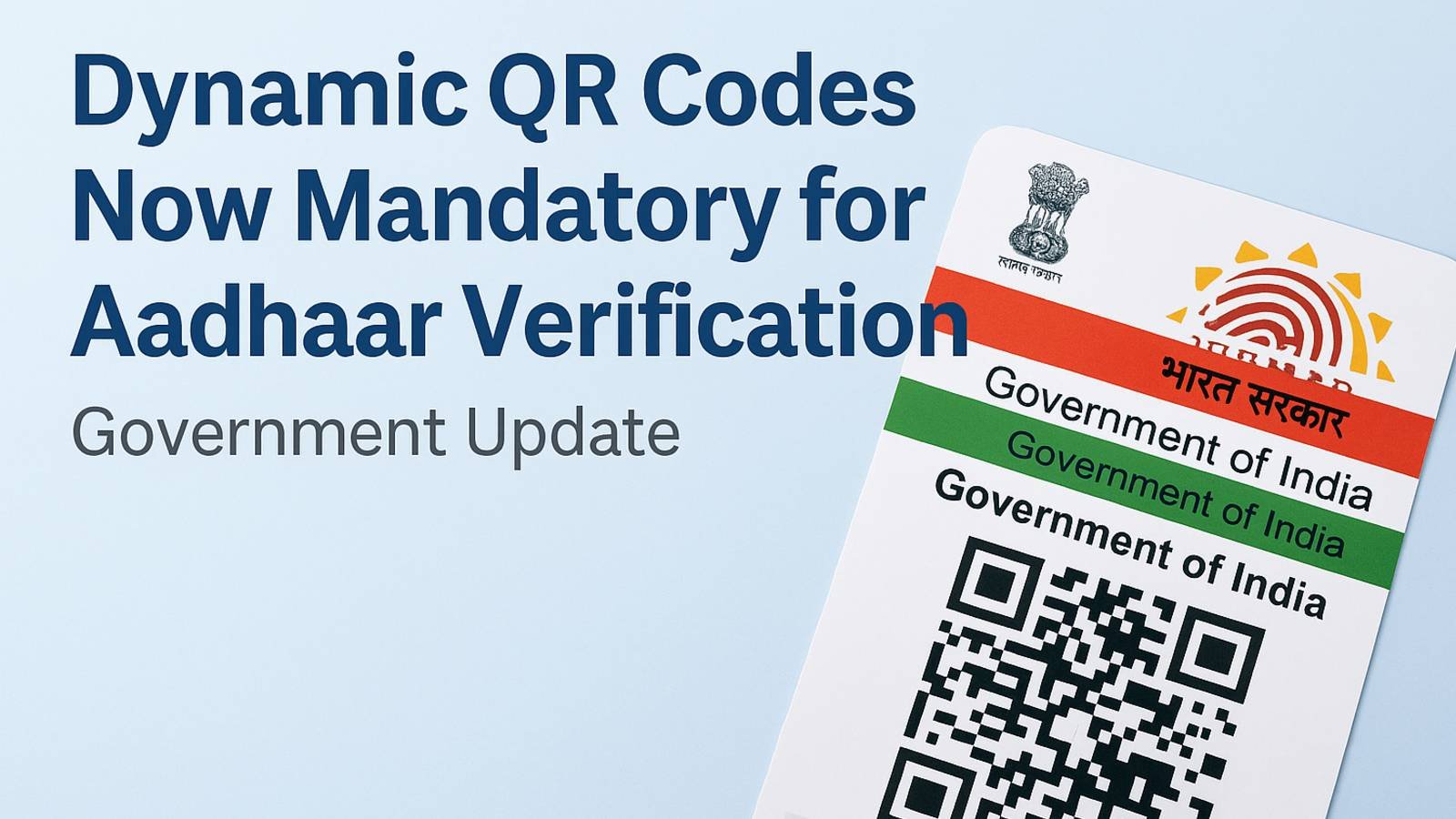
  • New Dynamic QR Codes for Aadhaar Verification – Govt Update

    New Dynamic QR Codes for Aadhaar Verification – Govt Update

    Dynamic QR Codes Now Mandatory for Aadhaar Verification – Government Update 2025

    dynamic qr codes for aadhaar verification

    The Government of India, along with UIDAI (Unique Identification Authority of India), has officially announced that Dynamic QR Codes will now be mandatory for Aadhaar verification across major sectors. This move aims to enhance the safety, authenticity, and accuracy of Aadhaar-based identity verification, reducing the risk of fraud and misuse.

    The update comes as part of the government’s broader push toward secure digital identity frameworks and improved KYC (Know Your Customer) processes, especially in banking, telecom, travel, digital payments, and public welfare services.

    What Are Dynamic QR Codes for Aadhaar?

    Dynamic QR Codes are real-time generated QR codes that change every time a user initiates an Aadhaar verification request. Unlike static QR codes printed on Aadhaar cards, dynamic QR codes:

    • Expire after a short period
    • Cannot be reused
    • Cannot be copied or forged
    • Offer high-level encryption
    • Are validated instantly through UIDAI’s server

    This makes them far more secure than static Aadhaar QR codes, which have been vulnerable to screenshots, misuse, and fraud attempts.

    Why Has the Government Made Dynamic QR Codes Mandatory?

    According to the UIDAI notification:

    “Dynamic QR-based Aadhaar verification will significantly reduce identity fraud and ensure a more secure digital ecosystem for citizens.”

    Here are the key reasons behind this mandate:

    1. Elimination of Fake Aadhaar Usage

    Static QR codes can be screenshot, edited, or reused. Dynamic QR codes completely prevent this risk.

    2. Real-Time Verification

    Every scan pulls live data from UIDAI’s secured servers, ensuring the identity is authentic.

    3. Strong Fraud Protection in Banking & KYC

    Banks, NBFCs, and digital loan platforms face a high number of fake KYC attempts. Dynamic QR solves this.

    4. Faster Verification Process

    Dynamic QR codes reduce manual checks and simplify onboarding for customers.

    5. Secure Aadhaar-Based Payments

    As UPI payments grow rapidly, secure QR-based KYC becomes essential for fraud prevention.

    Where Will Dynamic QR Aadhaar Verification Be Mandatory?

    The government has mandated the use of dynamic QR codes in sectors where identity verification is sensitive:

    ✔ Banks & Financial Institutions

    – Opening bank accounts
    – Applying for loans
    – Credit card applications
    – Insurance KYC

    ✔ SIM Card Issuance

    – New mobile connections
    – eSIM activation
    – Telecom KYC

    ✔ Digital Wallets & Fintech Apps

    – Paytm
    – PhonePe
    – Google Pay
    – Razorpay onboarding

    ✔ Travel & Hospitality

    – Hotels
    – Airports
    – Ticket bookings

    ✔ Government Schemes

    – Subsidy verification
    – DBT onboarding
    – Public welfare programs

    ✔ Corporate & Workplace Verification

    – Employee ID verification
    – Visitor verification

    Anywhere Aadhaar KYC is used, dynamic QR will now replace static Aadhaar photocopies.

    How Will Dynamic Aadhaar QR Code Verification Work?

    The new verification process is simple:

    Step 1:

    User initiates verification (bank, SIM, service provider).

    Step 2:

    UIDAI generates a unique dynamic QR code for that user session.

    Step 3:

    The official scans the QR via registered UIDAI scanner.

    Step 4:

    UIDAI validates the QR code in real-time and returns:
    – Name
    – Photo
    – Last 4 digits
    – DOB
    – Verification status

    Step 5:

    Verification completed within seconds.

    This new system is fast, secure, and eliminates human error.

    Benefits of Dynamic QR Codes for Indian Citizens

    1. No photocopy or Aadhaar print needed

    Digital verification becomes instant.

    2. No fear of Aadhaar misuse

    QR code cannot be reused or copied.

    3. Faster onboarding

    Banking, SIM activation, and services become quicker.

    4. More secure digital identity

    UIDAI encryption reduces fraud to nearly zero.


    When Will This Update Be Fully Implemented?

    The government has directed all major sectors to adopt the system by:

    Deadline: 1 July 2025

    Some sectors have already started using dynamic Aadhaar QR verification.

    The Government’s decision to make Dynamic QR Codes mandatory for Aadhaar verification is a major step toward building a safer and more efficient digital India. With real-time validation, enhanced security, and faster processing, this update will transform how Aadhaar is used for KYC and identity verification across the country.

    This policy ensures citizens’ identity remains protected while giving industries a more reliable verification method.

    For more information, you can visit the official UIDAI website: